
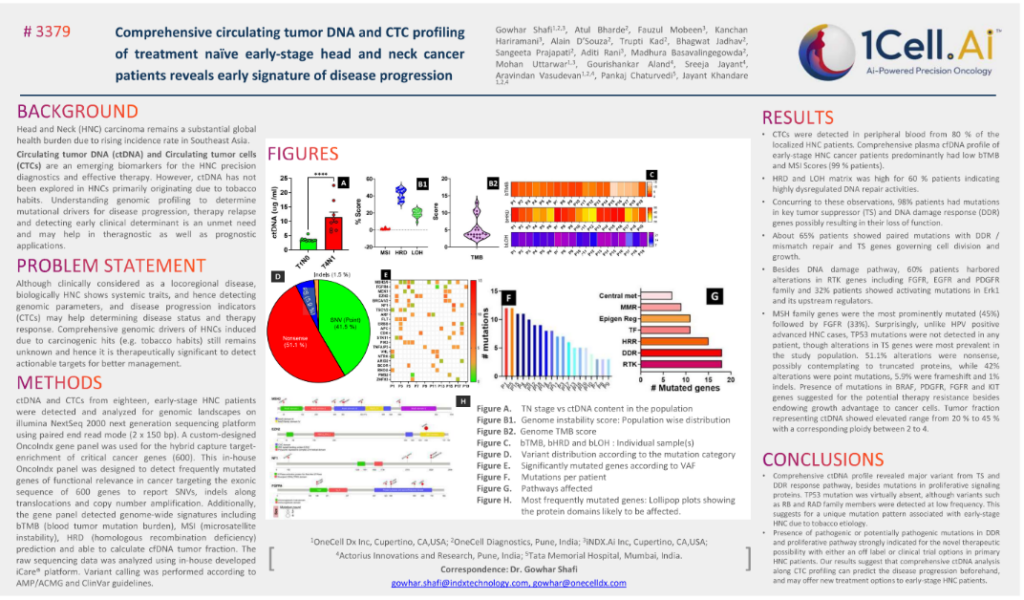
ctDNA and CTC co-profiling of 18 treatment-naïve early-stage HNC patients using Illumina NextSeq 2000 NGS with a custom 600-gene Oncolndx hybrid-capture panel
Genome instability markers — TMB, MSI, HRD, and LOH — assessed across patient samples; HRD and LOH matrix was high in 60% of patients, indicating dysregulated DNA repair
Mutation category breakdown shows 51.1% nonsense, 42% point mutations, with pie chart visualizing SNV, indel, frameshift, and translocation distribution
DDR and DNA damage response pathway mutations found in 98% of patients; MSH family genes most prominent, followed by FGFR (33%); TP53 mutations absent in all patients
Pathway-level analysis highlights alterations in MMR, HRR, DDR, RTK, epigenetic regulation, and transcription factor pathways via lollipop and bar chart figures
Tumor fraction via ctDNA ranged from 20–45%, with corresponding ploidy changes between 2–4, suggesting early systemic disease traits in a locoregional cancer
65% of patients showed paired DDR/mismatch repair and tumor suppressor gene mutations, potentially driving cell division dysregulation and cancer growth