

Table of Contents
ToggleYou finished treatment. The scans looked clear.
But is “clear” really the complete picture?
Finishing cancer treatment is one of the most significant moments of a patient’s life. But for many survivors, what follows is a quiet, persistent anxiety:
What if it comes back, and we don’t catch it in time?
That anxiety is not unfounded. And in many cases, the surveillance plan a patient is on after treatment may not be designed to answer that question as early or as accurately as possible.
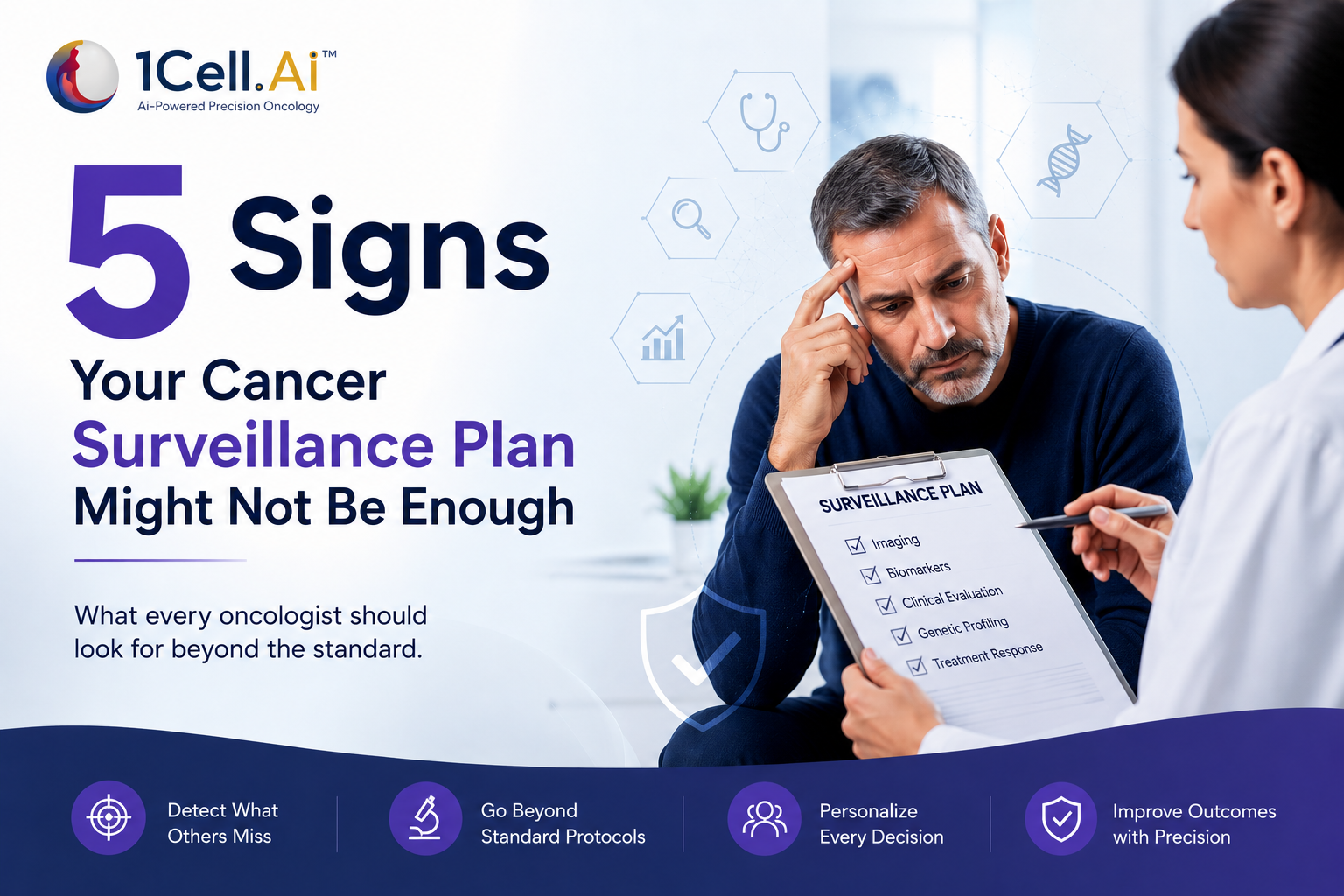
Here are 5 signs that your current cancer monitoring approach may have gaps worth discussing with your oncologist.
1. Your follow-up relies entirely on imaging
CT scans, PET scans, and MRIs are powerful, but they have a detection threshold. A tumour needs to contain roughly a billion cells before it shows up on a scan. Below that threshold, cancer can be present and growing- completely invisible to imaging.
If your surveillance plan consists only of scans every 3-6 months, there is a window of time where early recurrence could be missed.
2. You finished treatment more than 2 years ago, and your monitoring hasn’t changed
Recurrence risk doesn’t disappear after two years. In ER-positive breast cancer, late recurrence beyond 5 years is well documented. In colorectal cancer, roughly 1 in 3 stage II/III patients experiences recurrence. In ovarian cancer, the rate approaches 85%.
The standard post-treatment surveillance schedule was designed for an era before molecular monitoring existed. It hasn’t caught up to what’s now possible.
3. Your doctor checks tumour markers; but not circulating tumour DNA
Conventional tumour markers like CEA, CA-125, and PSA are useful, but they are general signals. They can rise for non-cancer reasons, and they can miss recurrence entirely in patients who are not “marker-expressers.”
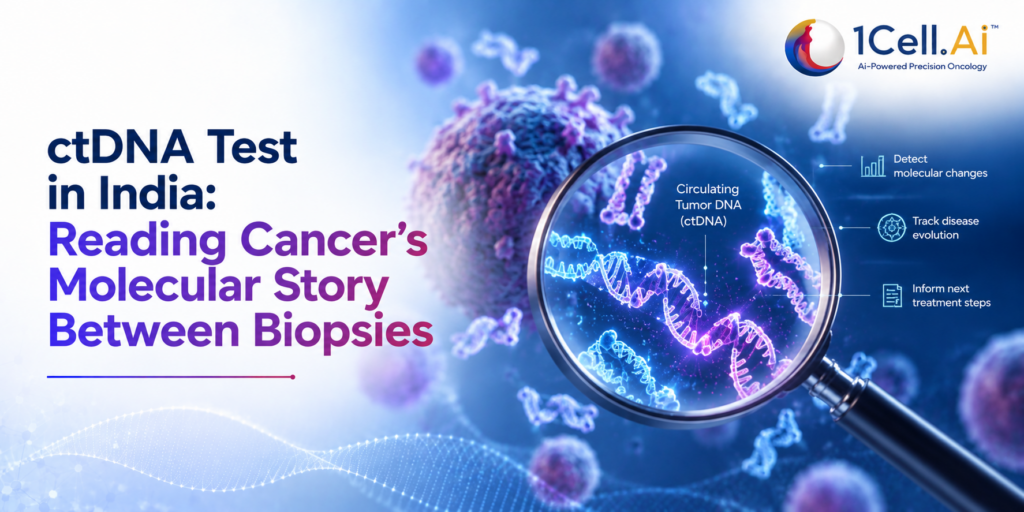
Circulating tumour DNA (ctDNA)- fragments of cancer DNA shed directly by tumour cells into the bloodstream, is far more specific. Studies show ctDNA can detect recurrence up to 18.5 months before imaging in breast cancer. That’s not a small window. That’s potentially the difference between catching it early and catching it late.
4.Nobody has mentioned MRD testing to you
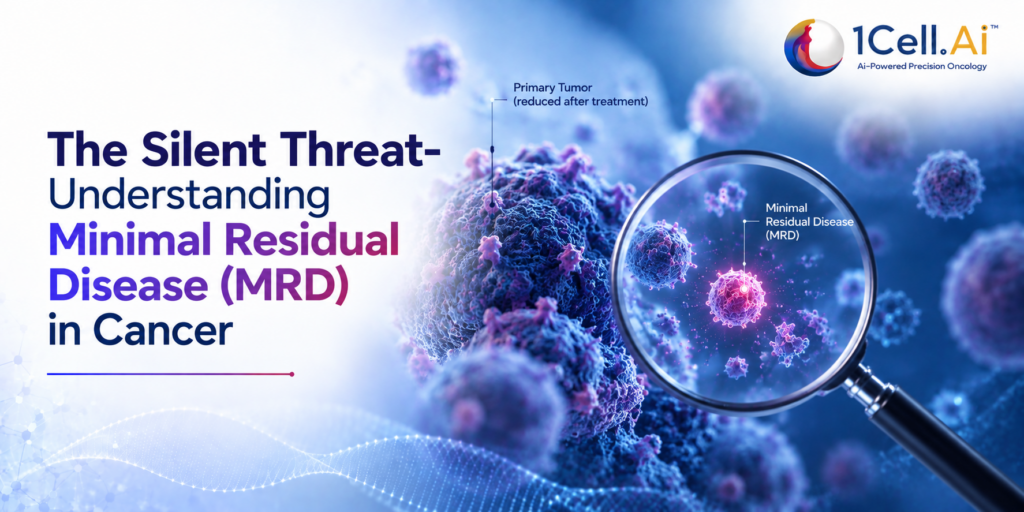
Minimal Residual Disease (MRD) testing looks for microscopic traces of cancer in the blood- at levels as low as 0.001% tumour fraction, after surgery or treatment is complete.
If your care team hasn’t discussed MRD testing with you, it doesn’t mean it isn’t relevant. It may simply mean the conversation hasn’t happened yet. As liquid biopsy technologies become more accessible, MRD monitoring is moving rapidly from research to routine clinical practice with the NCCN now formally recommending ctDNA-based MRD testing in bladder cancer, and evidence building across breast, colorectal, and lung cancer.
5. Your surveillance feels reactive, not proactive
A surveillance plan built around “we’ll scan you when you have symptoms” is fundamentally reactive. By the time symptoms appear, cancer has often already progressed significantly.
The shift happening in oncology right now is from watch and wait to watch and act- using molecular data from blood to detect change before it becomes clinical. Patients on proactive molecular monitoring programmes have the opportunity to intervene earlier, adjust therapy faster, and make treatment decisions from a position of information rather than urgency.
What to Ask Your Oncologist?
If any of these five points resonated, here are three questions worth raising at your next appointment:
- “Is ctDNA monitoring appropriate for my cancer type and stage?”
- “Have we discussed MRD testing as part of my post-treatment plan?”
- “Is there a more sensitive surveillance option beyond imaging alone?”
At 1Cell.Ai, our OncoMonitor® platform combines ctDNA and CTC-based monitoring to track disease status longitudinally- from a simple blood draw, as often as clinically needed. Because the best time to catch cancer coming back is before it announces itself.
Learn more about OncoMonitor® at 1cell.ai or write to us at [email protected]